Event Planning in Bangalore: A Complete Guide to Planning Weddings, Corporate Events & Celebrations
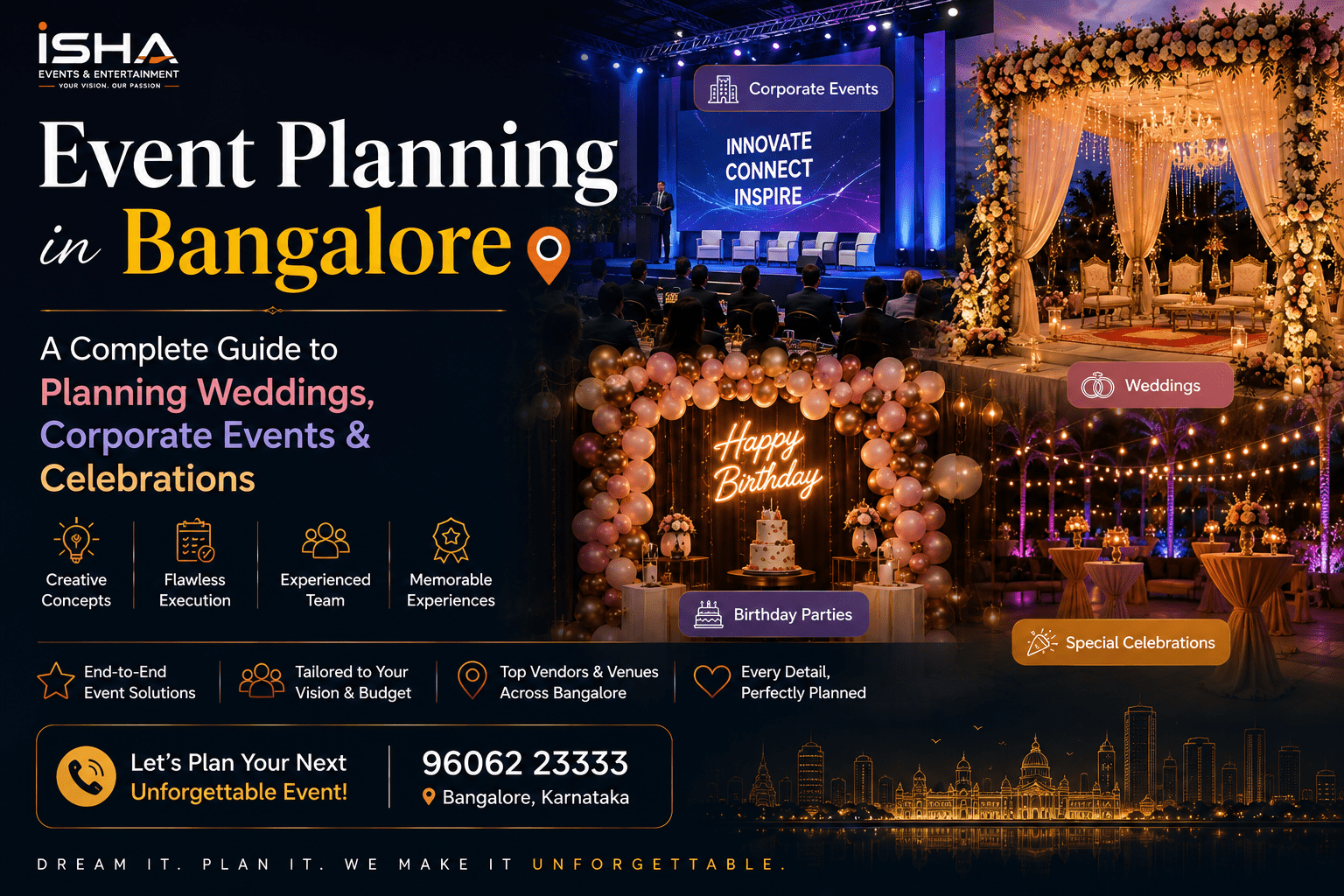
Planning an event in Bangalore can be exciting.
But once the planning begins, the number of decisions can quickly become overwhelming.
Which venue should you choose?
How many guests will attend?
What should the budget be?
Who will handle the décor?
Which caterer should you book?
Do you need professional sound and lighting?
What entertainment will suit the audience?
Who will coordinate the vendors on the event day?
And what happens if something goes wrong?
These are only a few of the questions involved in event planning.
Whether you are organising a wedding, corporate event, birthday, anniversary, product launch, service launch or private celebration, successful event planning requires much more than booking a venue and arranging decorations.
It requires strategy, creativity, coordination, budgeting and execution.
This complete guide explains how event planning works and what you should consider when organising an event in Bangalore.
What Is Event Planning?
Event planning is the process of designing, organising and coordinating all the elements required to successfully conduct an event.
Depending on the event, this can include:
Event concept
Budget
Venue
Décor
Catering
Entertainment
Photography
Videography
Sound
Lighting
Stage production
Guest management
Branding
Invitations
Transportation
Vendor coordination
Event-day execution
The goal is to make all these individual elements work together.
A successful event is rarely about one spectacular feature.
It is about how everything connects.
Why Professional Event Planning Matters in Bangalore
Bangalore has a wide range of venues, vendors and event services.
That gives clients plenty of choices.
But having more choices can also make planning complicated.
A single event may involve several independent vendors.
For example:
Venue → Decorator → Caterer → Photographer → DJ → Sound Team → Lighting Team → Entertainment → Transportation → Event Staff
If every vendor is managed separately, the host can quickly become the project manager.
Professional event planners provide a central point of coordination.
Instead of you following up with ten different suppliers, the event planning team can coordinate the moving parts.
That is one of the biggest advantages of professional event management.
Step 1: Define Your Event Objective
Before discussing décor or entertainment, identify why you are organising the event.
Your objective could be:
Celebrating a wedding
Celebrating a birthday
Marking an anniversary
Recognising employees
Hosting a conference
Launching a product
Launching a service
Building brand awareness
Entertaining clients
Bringing family and friends together
The objective should influence the planning decisions.
A corporate event should communicate professionalism.
A wedding should create a meaningful celebration.
A product launch should support the brand.
A birthday should reflect the personality of the person being celebrated.
Step 2: Define Your Guest List
Guest count affects almost every part of an event.
It influences:
Venue size
Seating
Catering
Invitations
Décor
Staffing
Parking
Transportation
Guest management
Budget
A 50-person event and a 500-person event require completely different planning approaches.
Therefore, estimate the guest count as early as possible.
Step 3: Set the Event Budget
The budget provides the foundation for the event.
Start with the maximum amount you are comfortable spending.
Then divide it into categories.
A typical event budget may include:
Venue
Catering
Décor
Entertainment
Photography
Sound and lighting
Stage and production
Transportation
Staff
Branding
Invitations
Contingency
Don’t forget the contingency amount.
Unexpected expenses can happen during events.
Having a buffer provides flexibility.
Step 4: Choose the Right Venue
The venue can significantly influence the event experience.
When selecting a venue in Bangalore, consider:
Location
Accessibility
Guest capacity
Parking
Indoor/outdoor options
Catering restrictions
Décor restrictions
Vendor access
Setup time
Technical facilities
Power availability
Guest movement
Weather protection
Don’t select a venue simply because it looks attractive.
Ask whether it actually supports the requirements of your event.
Step 5: Create the Event Concept
The concept gives the event its identity.
It can influence:
Décor
Lighting
Stage design
Colours
Entertainment
Invitations
Branding
Guest activities
For a wedding, the concept could be traditional, contemporary, minimalist or luxurious.
For a birthday, it could be based around a personal interest or theme.
For a corporate event, it could be aligned with the company’s identity.
For a product launch, the concept should reinforce the product’s positioning.
A strong concept creates consistency.
Event Planning for Different Types of Events
Different events require different planning approaches.
Let’s look at some of the most common categories.
Wedding Event Planning in Bangalore
Wedding planning can involve multiple functions and vendors.
The planning process may include:
Venue selection
Wedding décor
Stage setup
Catering
Photography
Videography
Entertainment
Music
Guest hospitality
Transportation
Invitations
Artist management
Wedding entries
Event-day coordination
The objective is to create a celebration that feels personal while ensuring that the family doesn’t have to manage every vendor.
Corporate Event Planning in Bangalore
Corporate events require professional execution and clear scheduling.
They can include:
Conferences
Seminars
Annual events
Award ceremonies
Dealer meets
Networking events
Employee celebrations
Team-building activities
Business meetings
Corporate parties
Planning may involve venue coordination, branding, AV, stage production, catering, guest registration, presentations and entertainment.
Timing is especially important.
Speakers, presentations and performances need to follow a controlled schedule.
Birthday Event Planning in Bangalore
Birthday celebrations can range from intimate family events to large themed parties.
Event planners can coordinate:
Theme décor
Balloons
Stage and backdrop
Cake area
Entertainment
DJ
Games
Activities
Photography
Catering
Guest seating
The event should be designed according to the age, personality and preferences of the person being celebrated.
Anniversary Event Planning
An anniversary celebration should feel personal.
Ideas can include:
Memory walls
Photo displays
Personalised décor
Video presentations
Live music
Special entries
Entertainment
Customised stage design
Themed dining
The objective is to create an experience around the story being celebrated.
Product Launch Event Planning
Product launches are both events and marketing opportunities.
The planning should therefore consider the brand’s objectives.
Important elements may include:
Product display
Stage
Branding
Presentation
Product reveal
LED screens
Lighting
Photography
Videography
Guest registration
Media coordination
Entertainment
Every element should contribute to the product story.
Service Launch Event Planning
A service launch needs strong communication.
The audience should understand:
What is the service?
What problem does it solve?
Who is it for?
Why should they care?
The event environment can support this through presentations, demonstrations, branding, networking and audience engagement.
Step 6: Select Vendors
Once the concept and budget are established, identify the required vendors.
Depending on the event, this can include:
Decorators
Caterers
Photographers
Videographers
DJs
Live performers
Anchors
Sound engineers
Lighting teams
Stage suppliers
AV providers
Transportation
Security
Event staff
Don’t select vendors based solely on price.
Consider:
Portfolio
Experience
Reviews
Reliability
Communication
Scope of work
Availability
Pricing
Step 7: Plan Décor and Production
Décor should support the event concept.
Key areas may include:
Entrance
Stage
Main backdrop
Dining area
Photo zone
Registration area
Branding areas
Production may include:
LED screens
Sound
Stage lighting
Ambient lighting
Microphones
Projectors
Presentation systems
The objective is to create a visually cohesive environment.
Step 8: Plan Catering
Food is a major part of the guest experience.
Consider:
Guest count
Menu
Dietary requirements
Service style
Meal timings
Beverage arrangements
Food stations
Kitchen facilities
Venue restrictions
The catering plan should match the type and duration of the event.
Step 9: Plan Entertainment
Entertainment should match the audience.
Possible options include:
DJ
Live band
Singer
Dance performance
Anchor
Games
Interactive activities
Cultural performances
Special performances
The goal isn’t to add entertainment simply because you can.
It should contribute to the overall experience.
Step 10: Manage Invitations and Guest Experience
Guest experience begins before the event.
Depending on the event, you may need:
Digital invitations
Printed invitations
RSVP management
Registration
Welcome desks
Guest lists
Seating arrangements
Name badges
Hospitality teams
The process should be simple and convenient for guests.
Step 11: Create an Event-Day Timeline
A detailed event schedule keeps everyone aligned.
For example:
Venue setup
↓
Décor completion
↓
Technical setup
↓
Sound check
↓
Rehearsal
↓
Guest arrival
↓
Opening
↓
Main programme
↓
Entertainment
↓
Dinner
↓
Closing
↓
Guest departure
Every major activity should have a responsible person.
Step 12: Prepare a Contingency Plan
Good event planning includes preparing for things that may not happen.
Weather.
Technical failures.
Vendor delays.
Traffic.
Power problems.
Programme changes.
Unexpected guest numbers.
For outdoor events, always consider a weather backup.
For technical events, keep backup equipment where practical.
For large events, maintain clear emergency contacts.
A backup plan doesn’t mean you expect problems.
It means you’re prepared if they happen.
Step 13: Conduct a Final Venue Inspection
Before guests arrive, the event team should walk through the entire venue.
Check:
Décor
Stage
Seating
Sound
Lighting
Screens
Registration
Catering
Signage
Branding
Guest areas
Restrooms
Parking
Emergency access
This final inspection can catch issues before the audience sees them.
Step 14: Execute the Event
Event-day execution is where professional planning becomes visible.
The event team should coordinate:
Vendors
Speakers
Performers
Catering
Guests
Technical teams
Venue staff
Programme schedule
The host should be able to enjoy the event rather than constantly checking whether suppliers have arrived.
Step 15: Evaluate the Event
Once the event is over, review the outcome.
Ask:
Did we achieve the objective?
Was the budget controlled?
Did guests enjoy the event?
Which vendors performed well?
Were there delays?
What problems occurred?
What can be improved?
This creates valuable learning for future events.
How to Choose an Event Planning Company in Bangalore
If you are searching for an event planning company, don’t choose solely based on price.
Evaluate:
Experience
Have they handled events similar to yours?
Portfolio
Does their previous work match your expectations?
Communication
Do they understand your requirements?
Budget
Can they work within your financial limits?
Vendor Network
Do they have dependable suppliers?
Execution
Who will manage the event on the day?
Contingency Planning
How do they handle unexpected situations?
The right event planner should make the process easier, not create another layer of complexity.
Why Choose Bengaluru Production House?
Bengaluru Production House provides event planning and execution support for different types of events in Bangalore.
The planning approach can be customised according to the client’s objectives, audience, venue, theme and budget.
Services can support events such as:
Corporate events
Weddings
Birthday celebrations
Anniversaries
Product launches
Service launches
Private celebrations
Special events
The focus is on bringing the different parts of the event together.
From concept development and planning to décor, entertainment, vendor coordination, technical requirements and event-day execution, the goal is to create a smooth experience for both the host and the guests.
What Makes Good Event Planning Different?
Good event planning isn’t about adding the maximum number of services.
It’s about selecting the right services.
It isn’t about making everything expensive.
It’s about allocating the budget intelligently.
It isn’t about controlling every tiny detail personally.
It’s about building a team capable of managing those details.
And it isn’t about hoping nothing goes wrong.
It’s about being prepared when something does.
Final Thoughts
Event planning in Bangalore can be exciting, but it can also become overwhelming when every responsibility falls on one person.
The right planning process changes that.
Start with the objective.
Understand your guests.
Set the budget.
Choose the venue.
Create the concept.
Select reliable vendors.
Plan the experience.
Build the timeline.
Prepare for unexpected situations.
Then execute.
A memorable event is the result of hundreds of small decisions working together.
The guests may never see the planning meetings, vendor calls, technical rehearsals or contingency discussions.
And that’s okay.
When event management is done properly, the behind-the-scenes complexity disappears.
All the guests see is a smooth, enjoyable and memorable experience.
That’s the real power of professional event planning.
Frequently Asked Questions
1. What does event planning include?
Event planning can include concept development, budgeting, venue selection, décor, catering, entertainment, photography, technical production, guest management, vendor coordination, logistics and event-day execution.
2. What types of events can be planned in Bangalore?
Professional event planners can organise weddings, corporate events, birthdays, anniversaries, product launches, service launches, conferences, private parties and other customised celebrations.
3. How much does event planning cost in Bangalore?
Costs vary depending on the event type, guest count, venue, décor, catering, entertainment, technical production and other requirements. A customised quotation is generally more useful than a standard price.
4. How early should I start planning an event?
The ideal timeline depends on the size and complexity of the event. Large weddings, corporate events and product launches generally benefit from longer planning periods.
5. What should I consider when choosing a venue?
Consider capacity, location, accessibility, parking, catering facilities, technical infrastructure, setup time, vendor access and weather protection.
6. Why is budgeting important in event planning?
Budgeting helps determine which services and vendors are suitable. It also allows you to prioritise the elements that have the greatest impact on the event experience.
7. Can an event planner manage vendors?
Yes. Depending on the agreed scope, an event planner can coordinate decorators, caterers, photographers, entertainers, technical teams, transportation providers and other vendors.
8. What is event-day coordination?
Event-day coordination involves supervising the schedule, vendors, technical teams, entertainment, catering, guest movement and other operational requirements while the event is taking place.
9. What is contingency planning in event management?
Contingency planning involves preparing alternative solutions for unexpected situations such as bad weather, technical problems, vendor delays, power issues or programme changes.
10. Does Bengaluru Production House provide event planning in Bangalore?
Bengaluru Production House provides event planning and execution support for corporate and social events, including weddings, birthdays, anniversaries, product launches, service launches and other celebrations.
11. Can event planning be customised according to the client’s budget?
Yes. The event can be structured around the client’s budget by identifying priorities and selecting suitable venues, vendors and services.
12. Why should I hire a professional event planner?
A professional event planner can reduce the workload involved in coordinating multiple vendors, schedules and logistics. It also provides dedicated support during the event, allowing the host to focus on guests and the experience.
Planning an event in Bangalore?
Start with the vision.
Build the right plan.
Let the right team handle the details.
Bengaluru Production House — creating well-planned, professionally executed and memorable events in Bangalore.
End-to-end event management tailored to your style, scale, and budget. Let’s create moments that last a lifetime.
- Margondanahalli, Bengaluru, Karnataka 560036
- info@bengaluruproductionhouse.com
- +91 96062 23333
Quick Links
Useful Links
Newsletter
Subscribe to get exclusive event planning tips, venue updates, and special offers delivered straight to your inbox.